Research Entry #1
Critical Analysis of Disney Character Design: Legacy vs. Bias
This entry analyzes the evolution of Disney’s character design, specifically comparing the technical success of design aspects against their reliance on harmful visuals. While Disney’s use of aesthetically brilliant animation has sustained a prestigious legacy for over a century, the foundation of these designs often relies on “beauty-equals-goodness” binaries.
Historical texts that inspired the films, such as the Grimm brothers’ collections, reveal that the sanitization of folklore didn’t just remove gore, but further enforced a heteronormative, white beauty standard. Originally, these stories were not meant for children but were shared among adults and served as cautionary tales. The original Grimm fairy tales were not sanitized like the Disney adaptations. The Grimm characters often faced gruesome punishments. In Snow White, the Evil Queen is forced to dance in hot iron shoes until she dies. In Cinderella, the stepsisters cut off their toes and heels to fit the slipper. Later, the birds peck out their eyes. Unfortunately, the Grimm brothers heavily edited the stories to promote 19th-century domesticity. They often stripped heroines of agency, twisting them into passive victims rather than quick-witted or intelligent figures. The stories often link beauty with whiteness and “ugliness” with moral corruption.
My capstone project seeks to harness Disney’s strengths while actively dismantling its historical biases. Disney’s mastery of shape language ensures characters are instantly recognizable, yet this skill has frequently been weaponized. My research highlights three areas of failure in character design:
Misogyny: The depiction of women in Disney animated films is often problematic. For instance, The Little Mermaid chooses a man over her mermaid heritage. When illustrating women or princesses for this project, I will align myself with the archetypes of characters like Tiana, Merida, Mulan, Moana, and Rapunzel. In my opinion, these are the strongest representatives of Disney princesses.
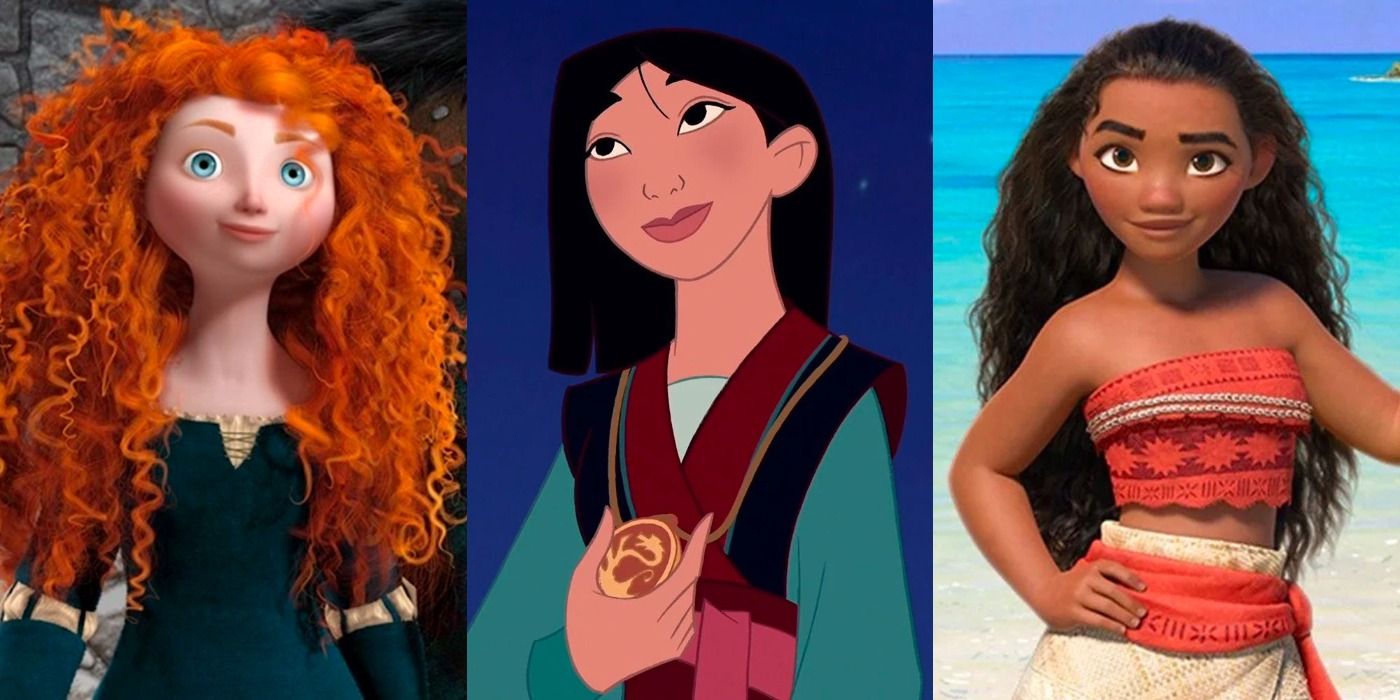
Merida, Mulan, and Moana Queer Coding: Disney’s history of queer-coding villains and lack of LGBTQ+ representation is shocking. Ursula, Jafar, Scar, and Hades were designed with traits associated with queer culture. For instance, Ursula is directly based on the drag queen Divine. While Disney has introduced a few queer characters, it’s often in blink-and-you-miss-it scenarios.

Ursula and Iconic Drag Queen "Divine" Comparison of Disney villain designs, showcasing dramatic shape language and queer-coded traits. Racial Caricatures: Native Americans are portrayed as savages in Peter Pan (1953) and are poorly represented in Pocahontas (1995). Modern films featuring people of color often transform them into animals or non-human entities for the majority of the film—Brother Bear, The Emperor’s New Groove, The Princess and the Frog, Soul, and Turning Red. These five films are favorites of mine, but this striking trend is worth critiquing.

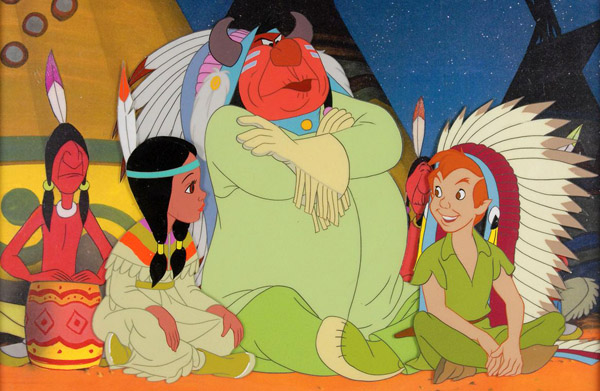 |
| Racist imagery in Peter Pan |
Sources:
Cruz, Lenika. "The Feminist Legacy of The Little Mermaid’s Divisive, ‘Sexy’ Ariel." The Atlantic, 13 Nov. 2014, www.theatlantic.com/entertainment/archive/2014/11/the-little-mermaid-at-25-and-the-evolving-definition-of-strong-female/382581/.
Ramos, Angélica. "Disney’s Disembodied Black Characters." Los Angeles Review of Books, 15 Mar. 2021, lareviewofbooks.org/article/disneys-disembodied-black-characters/.
"The Dark Original Stories Behind Disney Films." Pan Macmillan, 24 Oct. 2023, panmacmillan.com.
The Week Staff. "A Short History of LGBTQ+ Representation in Disney Films." The Week, 17 June 2022, theweek.com.


I have really appreciated seeing your idea develop and change in class. Although your idea is now more focused on Greek Methodology, the research above highlights important and negative themes that we see in character design. It's obvious that you are aware of these unfair and biased elements in character design, and I am very excited to see how you combat these norms in your designs!
ReplyDeleteI like how you pointed out that Disney’s character design is technically really strong but still built on a lot of problematic visual ideas like the “beauty = goodness” thing. The part about characters of color being turned into animals or non-human forms in a lot of films was something I hadn’t fully thought about before, but it’s actually a pretty clear pattern. I also like that your project isn’t just criticizing Disney but trying to use those design strengths in a better way. I’m was so excited to see your character designs coming to life in class, can't wait to see more.
ReplyDelete